Teach law with AI-generated comic books
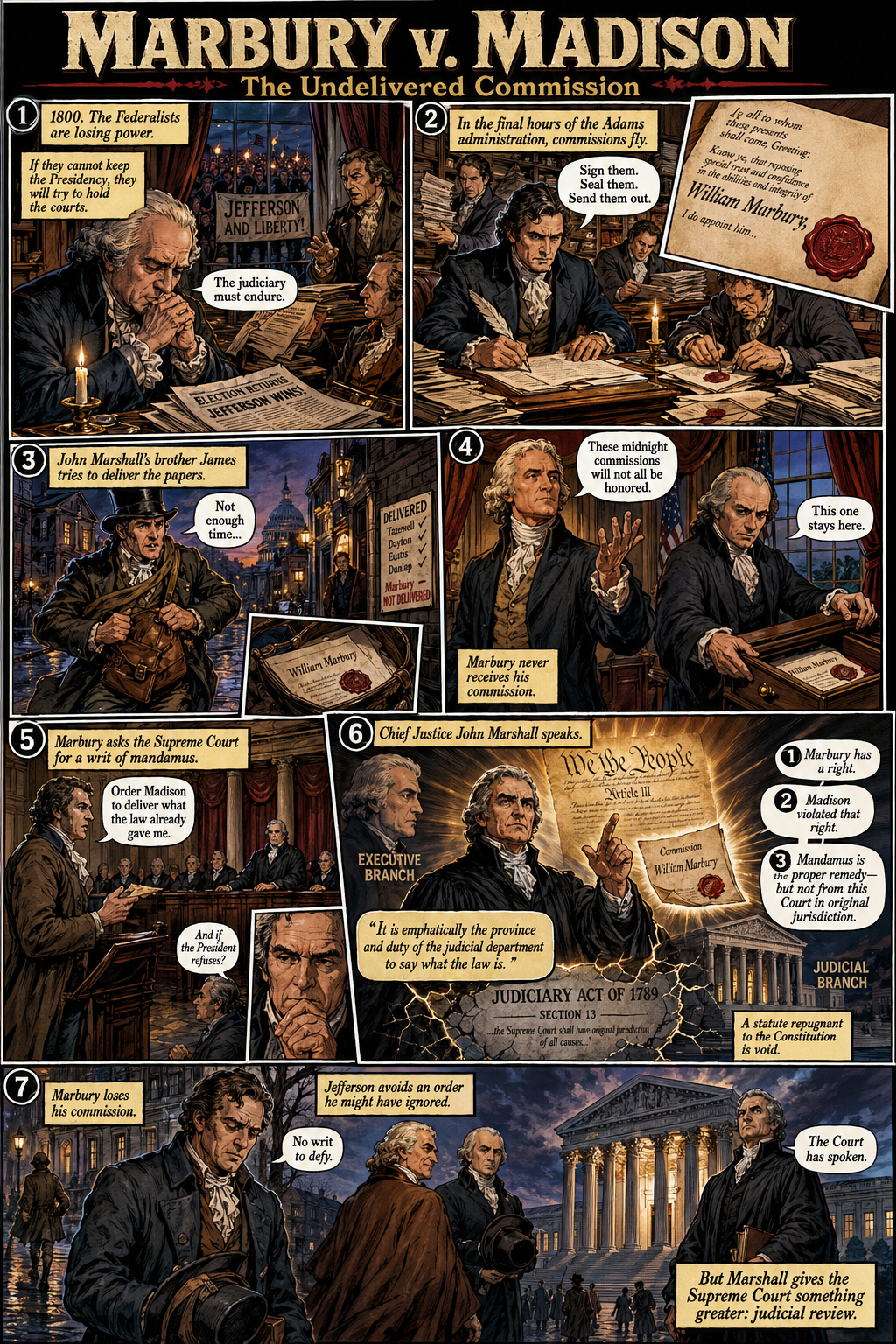
AI image generation has gotten good enough that legal educators can now experiment with teaching law through comic book panels. I'm going to prove this by example. Here's a classic contracts case.
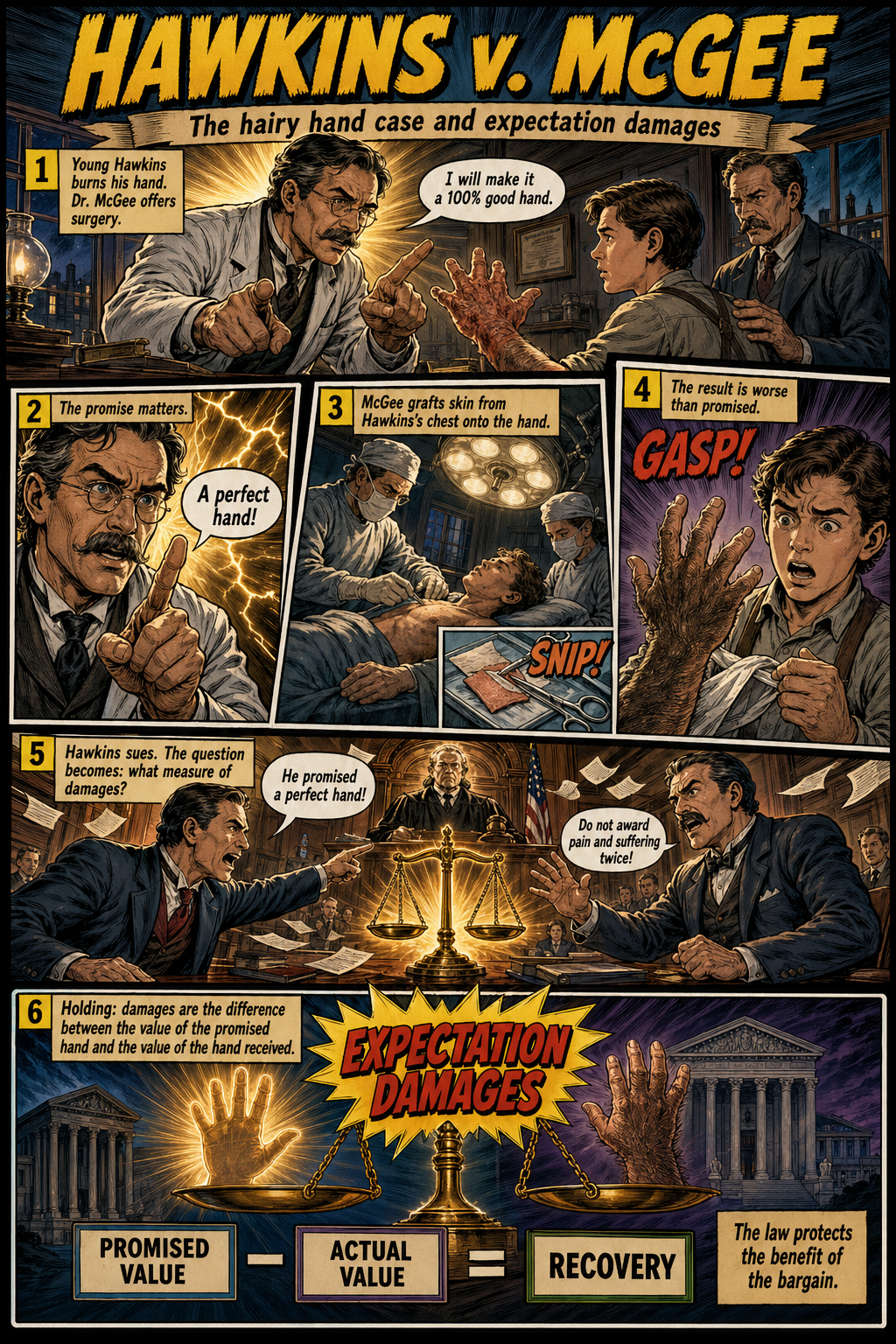
And here's one of Peevyhouse v. Garland Coal Co., a classic that I believe all contracts students still encounter.
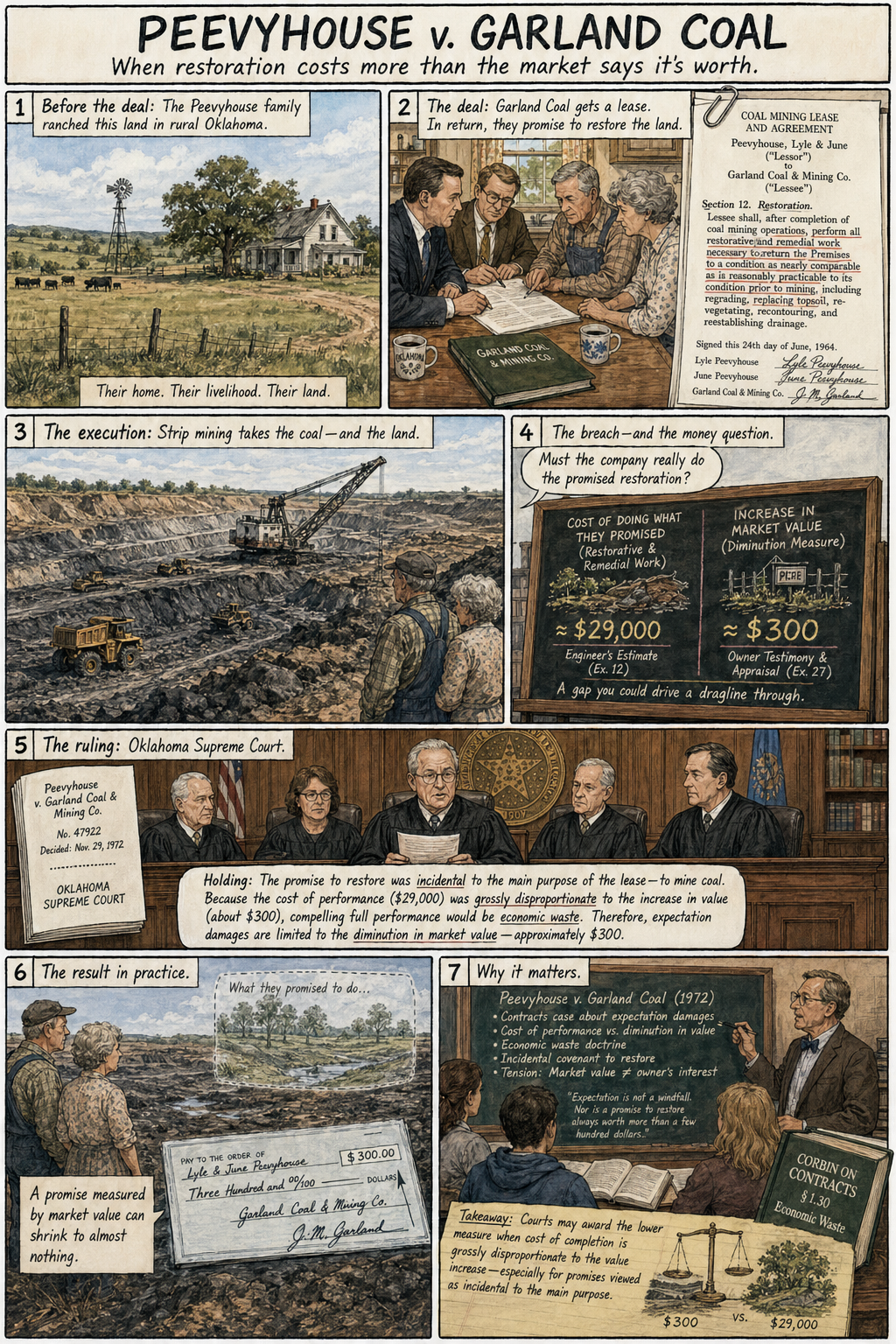
Well, fine, it can do these story-like cases, but what can it do with more abstract concepts? Here's one of Jee v. Audley, which involves the inscrutable Rule Against Perpetuities.
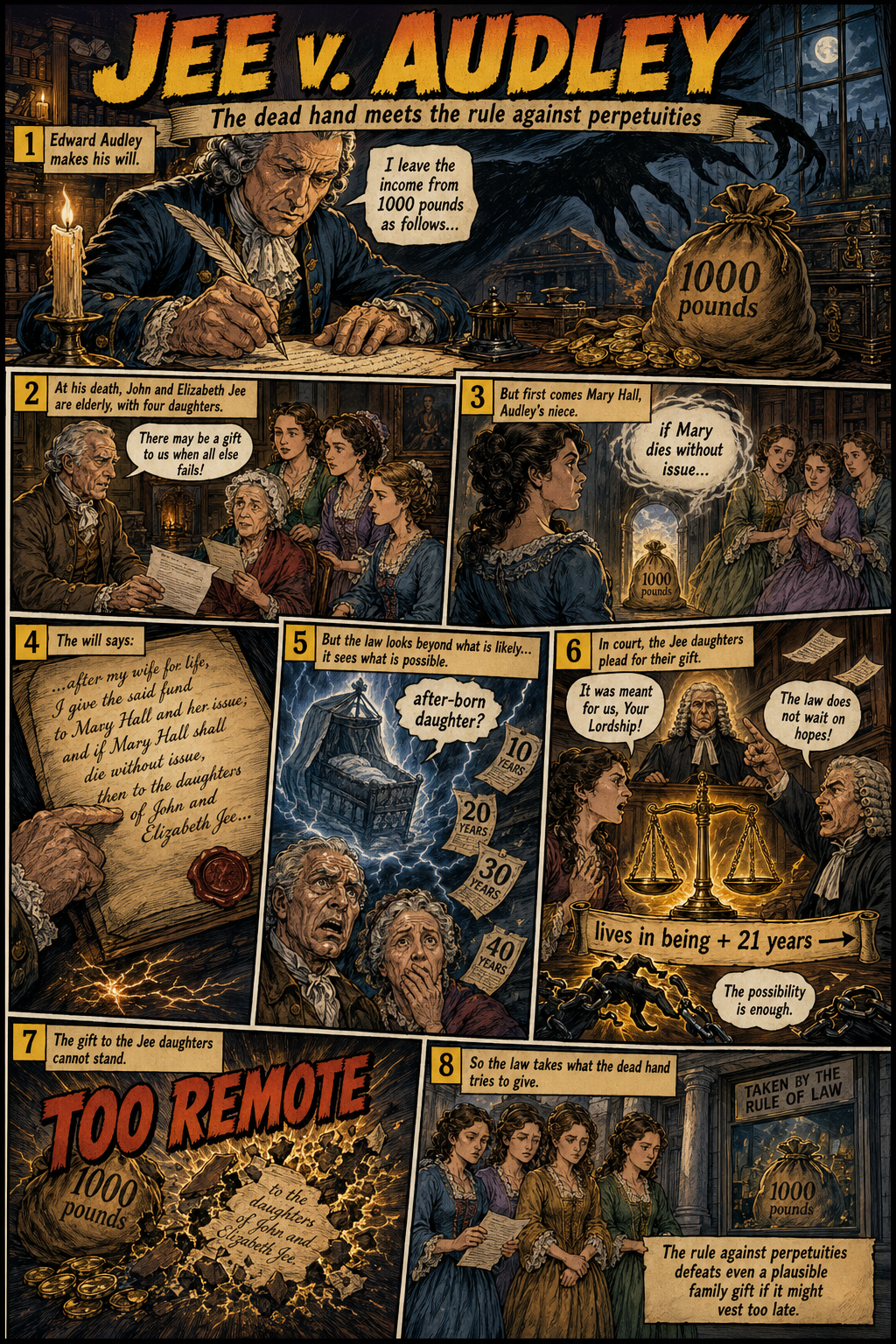
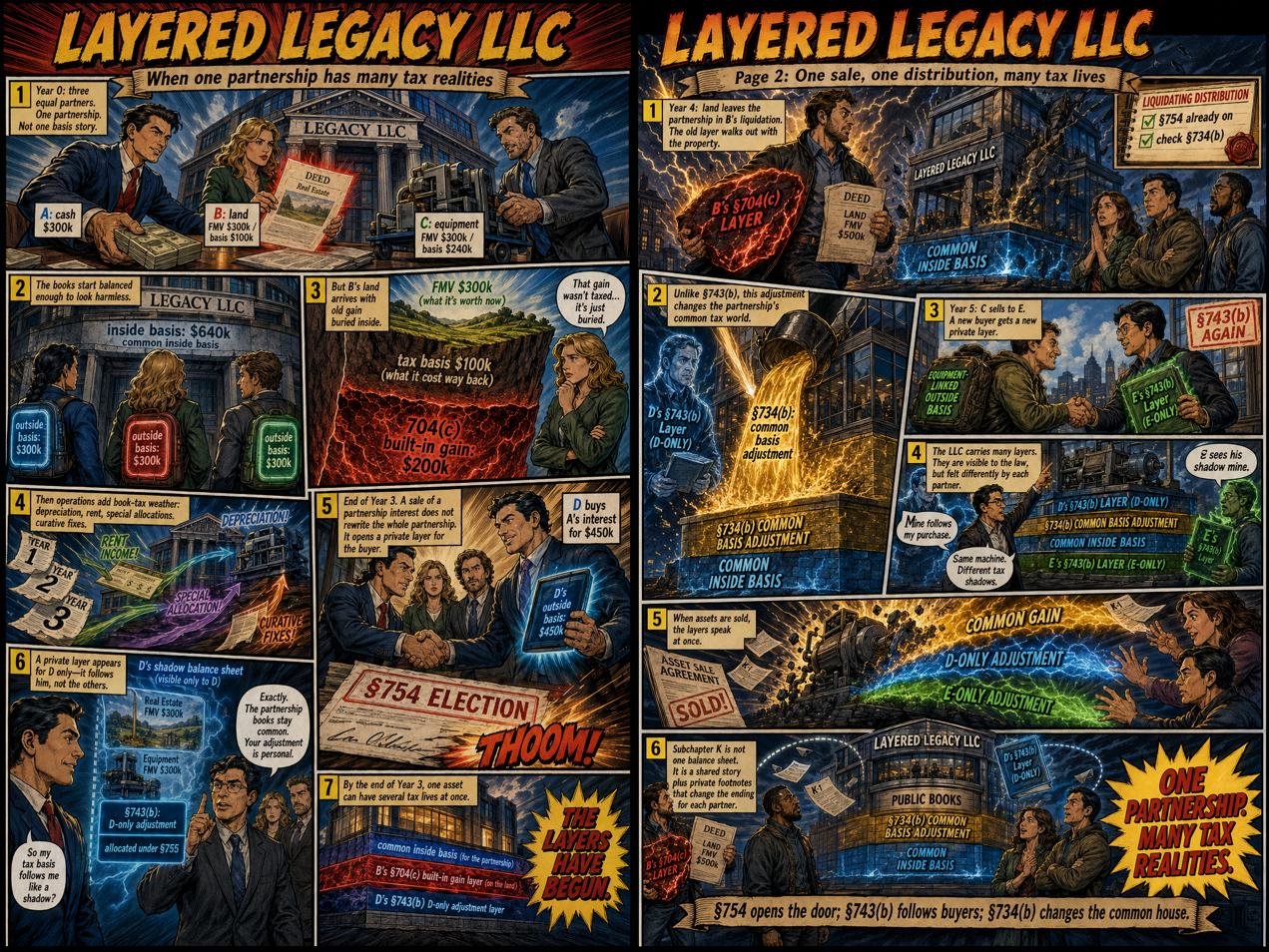
Or what about complex tax law issues? Here's one involving partnership tax that pushes against the limits of comic-book exposition. Sadly, I have no idea whether it is correct! (Perhaps one of my subscribers could let me know!!)
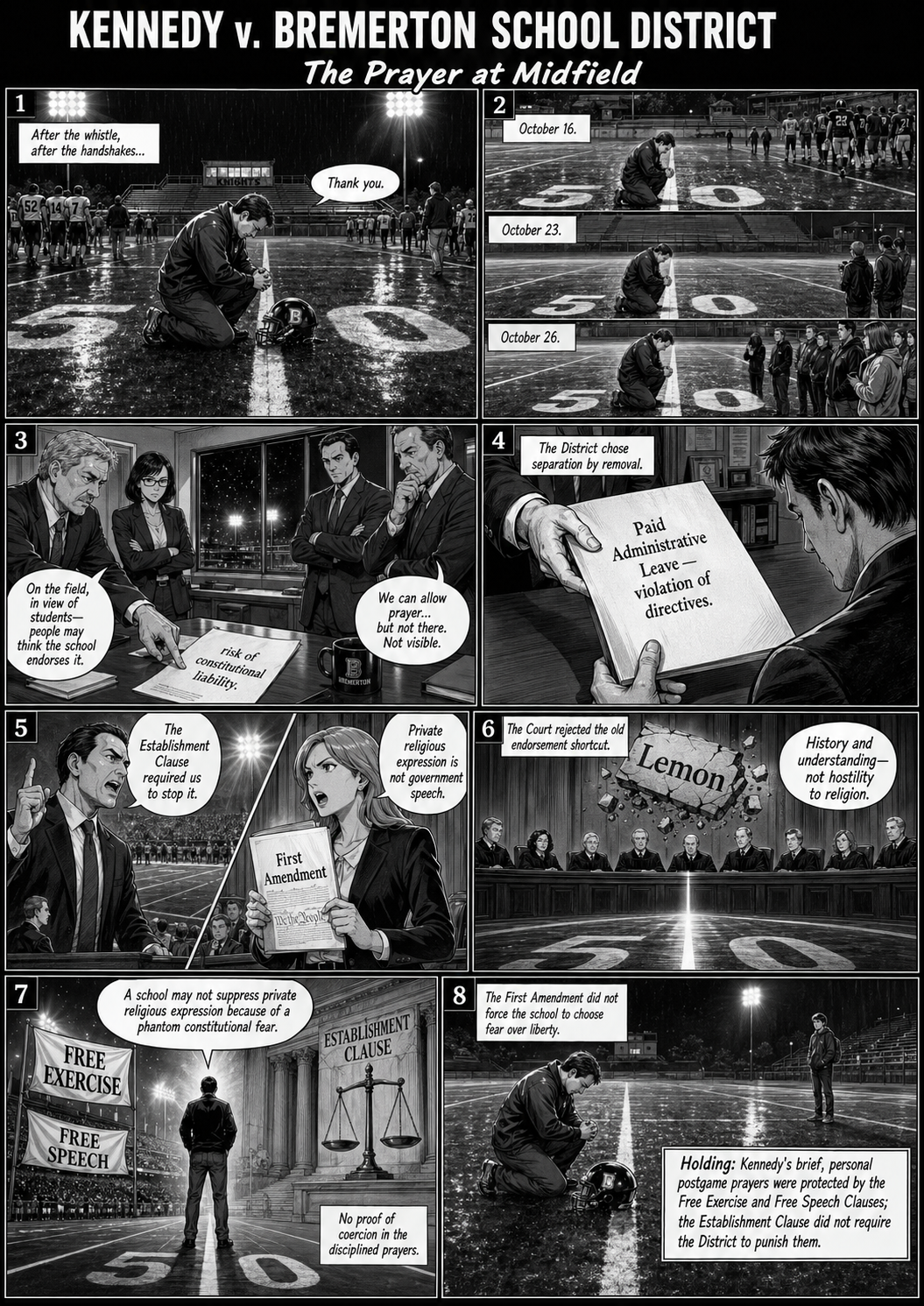
What makes all this possible is a good prompt and the incredible capabilities of ChatGPT 5.5 (f/k/a "Spud") combined with its second generation image model. It takes a few minutes for the images to render but the quality differential, particularly for complex legal applications, is well worth the extra time. You can access the model through the classic ChatGPT interface simply by requesting an image or through the Codex app, a specialized version of ChatGPT growing rapidly in popularity that is built specifically for development workflows rather than general conversation. Either way, you get access to the first model that does a great job with text, which is essential for successful legal teaching. I've created a Custom GPT (Classic Comic Image) that contains the prompt. If there's a particular comic book or illustration style you prefer, you can alter the prompt accordingly. Here's one, for example, in which I urge it to adopt more of a manga/anime style.
Note: Be wary of hallucinations and the failure to follow prompts. Out of the box, ChatGPT is not grounded in legal texts. So unless and until you hook ChatGPT up to a service like midpage ai (which is now possible!) that has the ability to access and read primary legal authority, you need to check the output against the actual case or doctrine involved. Moreover, it took some screaming at the model to get it to depart from its default style. Ultimately, however, we got something that I think is quite decent.
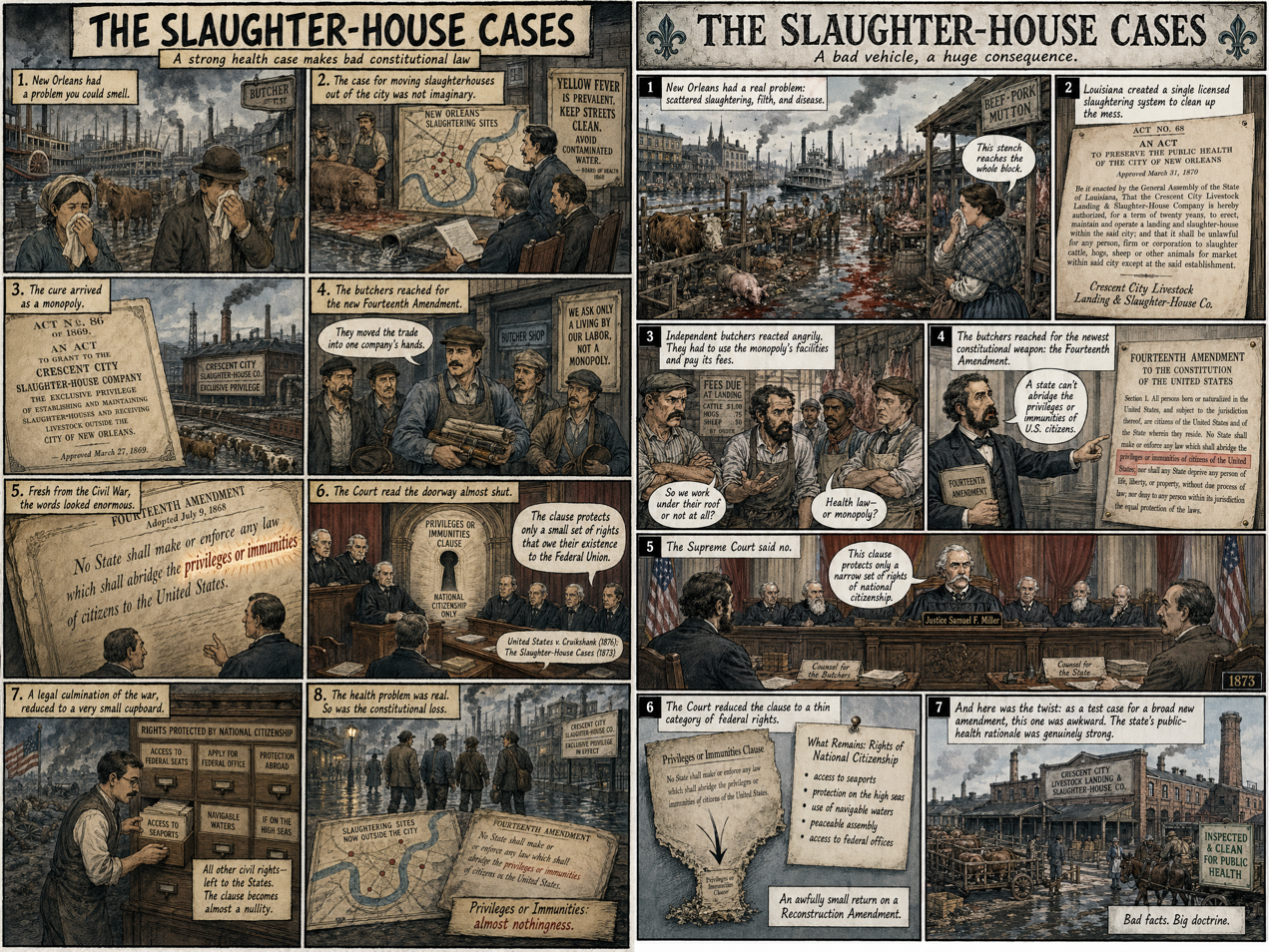
Here are a couple on The Slaughter-House Cases that attempted to adopt the style of one of my favorite graphic novelists. I generated the instructions by first naming the artist and asking the model to generate instructions that would emulate their style. I then prepended those instructions to my prompt, which was far more directive than the ones I used for the illustrations shown above.
I want you to create a comic book strip on The Slaughter House cases. There should be some cynicism because the decision ends up converting the privileges or immunities clause of the 14th amendment into almost nothingness. If one views that amendment as the legal culmination of the civil war, the decision suggests – absurdly – that we fought the civil war to prevent states from depriving us citizens of access to seaports. Also, stress that this is a terrible test case for the 14th amendment, the case for improving public health in steamy, fever-laden New Orleans was pretty strong. Don't preach though. Hint.
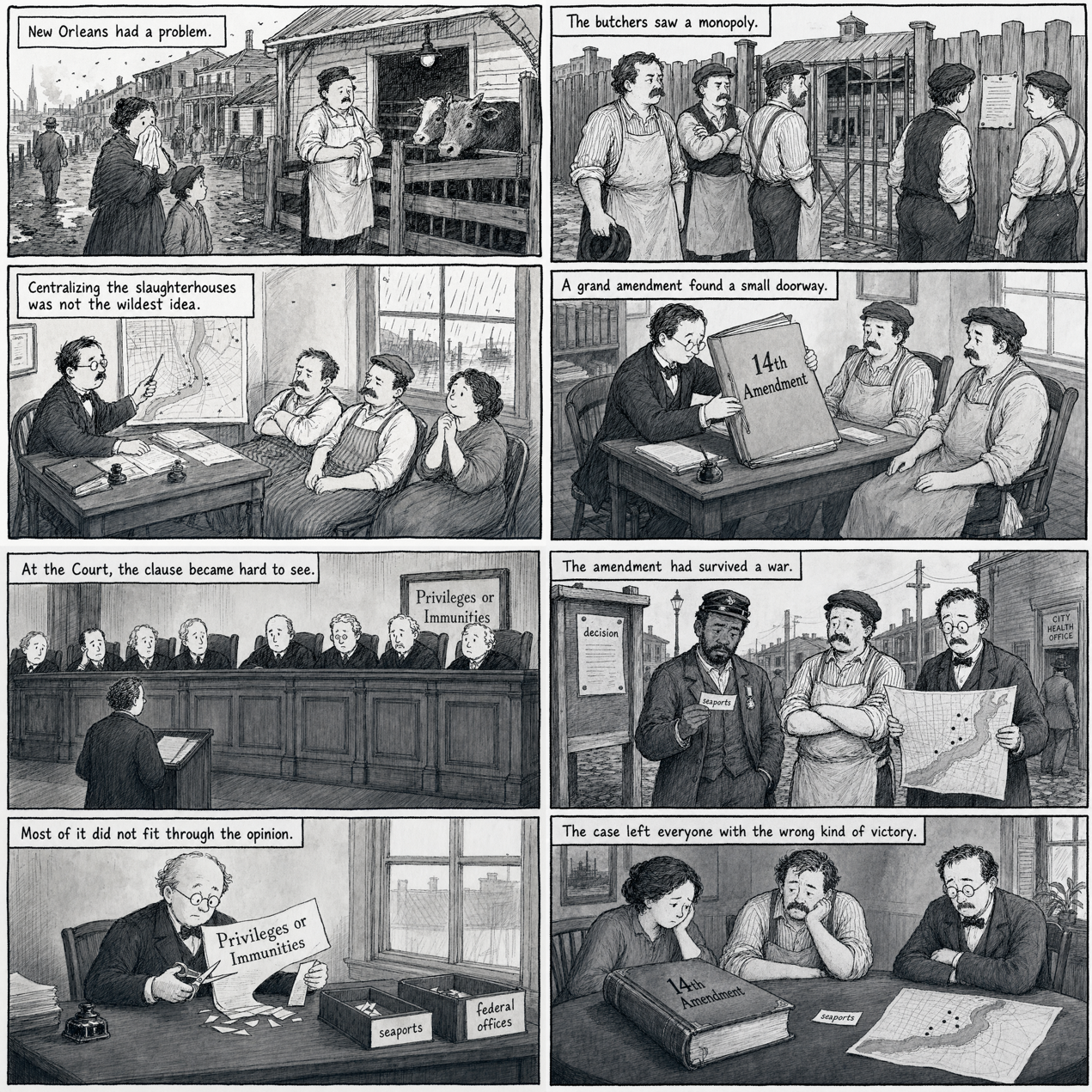
From an artist-replication standpoint, these efforts were a complete fail. The effort proceeded more faithfully when I started a new session and gave ChatGPT examples of the artist’s work, let it produce a draft image, asked it to identify what was wrong stylistically with that draft image, and then used that error correction as a vehicle to drive a better outcome. Here we can see the resulting four-panel version of The Slaughter-House Cases. It is more subtle than some of the other efforts shown here. Indeed, for teaching purposes it may well be too subtle.
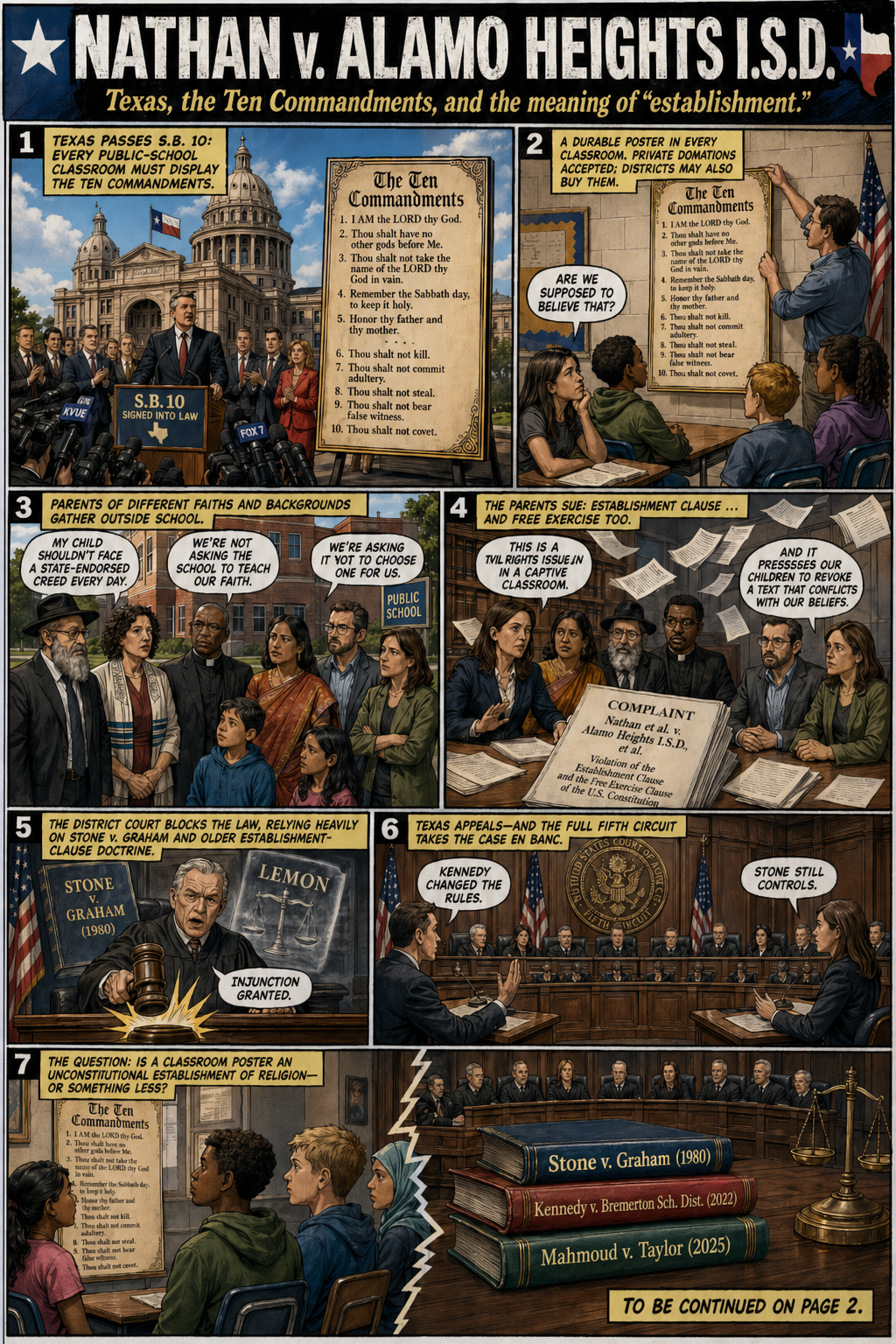
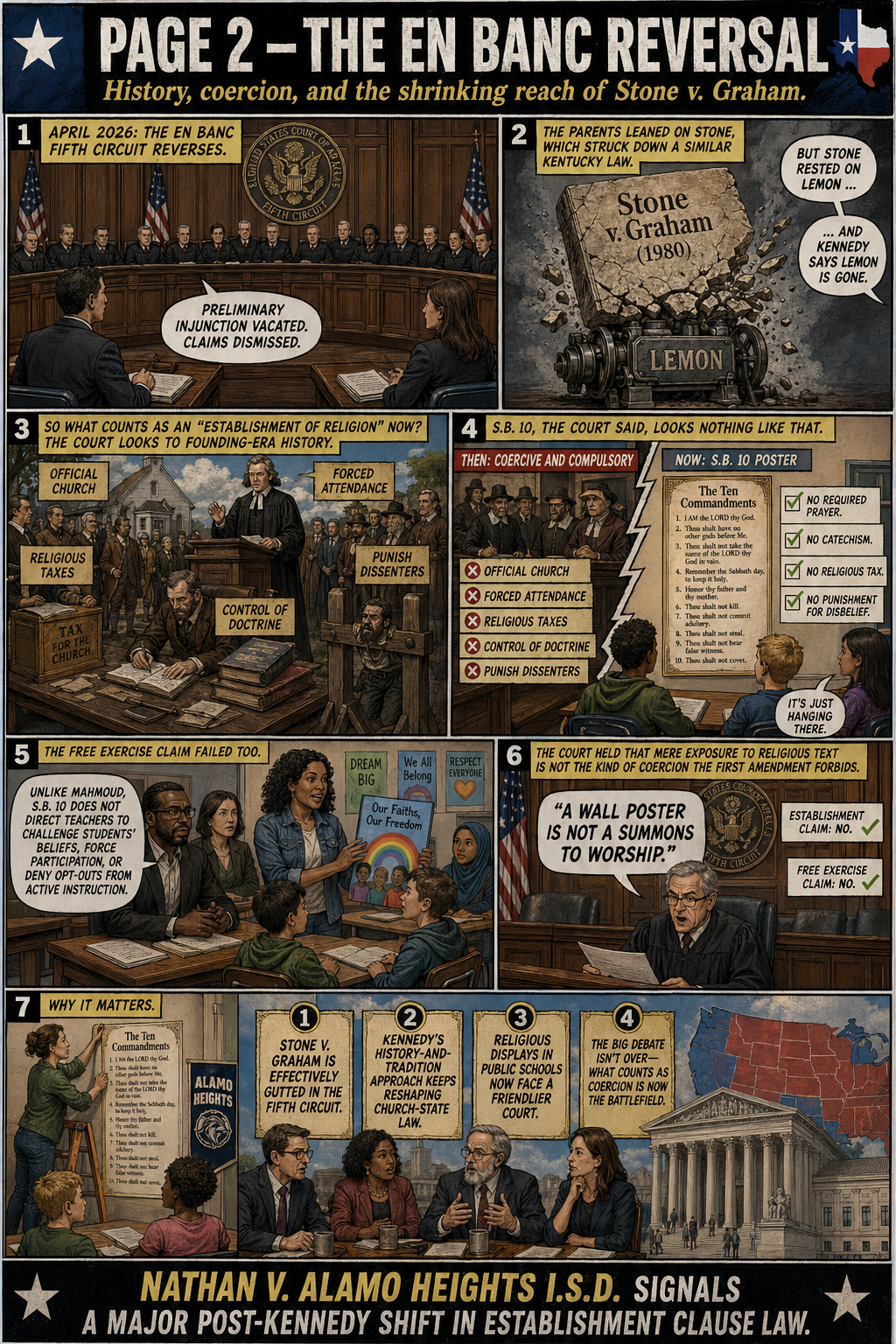
The new image generation capabilities go beyond comic books, however. They are also great for "infographics." Here's a two-image explainer of the Fifth Circuit en banc's latest decision in Nathan v. Alamo Heights I.S.D. on the Establishment Clause, in which a 9-8 majority finds no constitutional problem with Texas requiring public schools to put posters of the King James version of the Ten Commandments in every classroom.
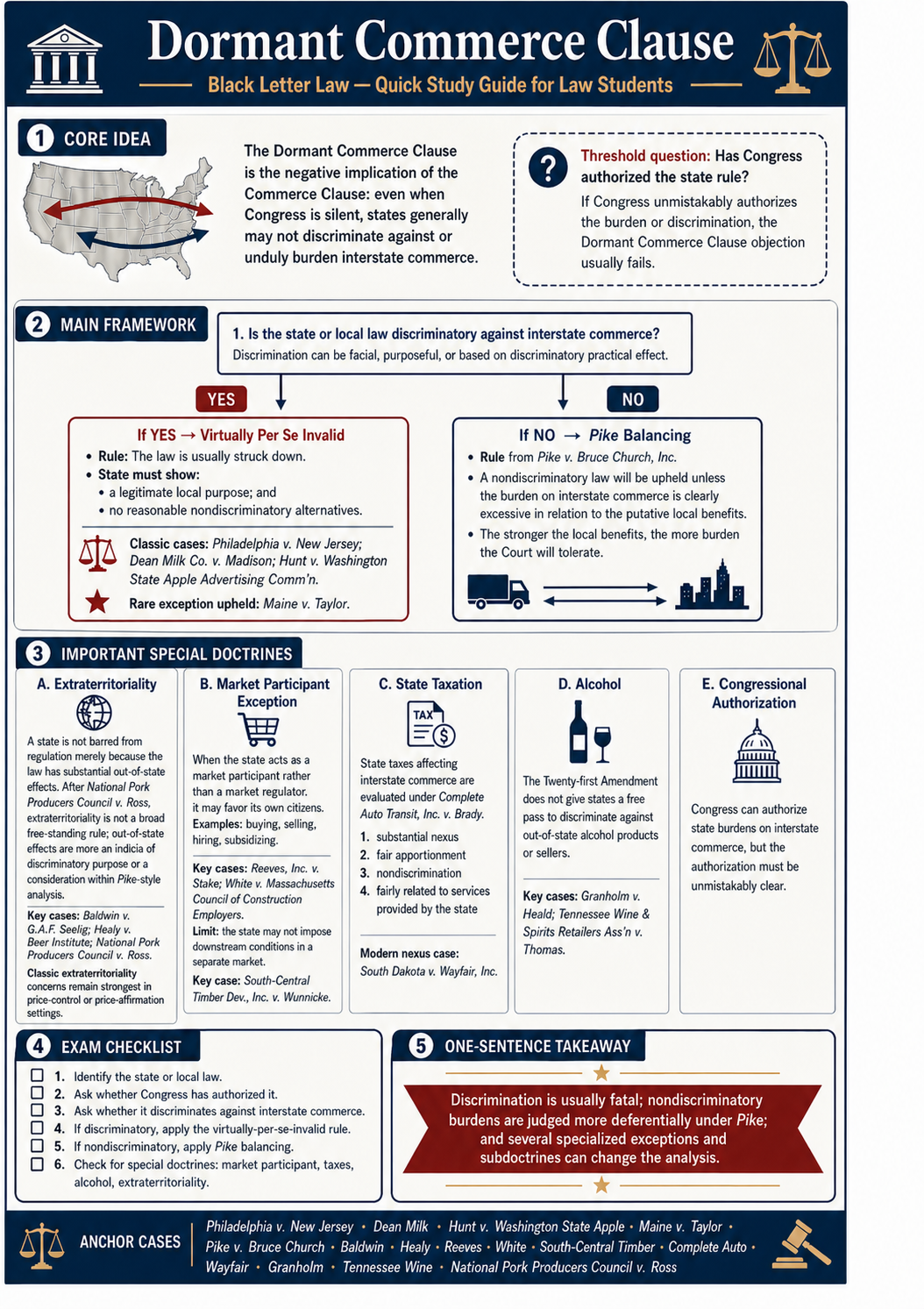
And here's one on the black-letter of law of the Dormant Commerce Clause. The prompt was simple: "Create an infographic for law students on the black -letter law of the Dormant Commerce Clause." When the resulting infographic neglected the recent case of National Council of Pork Producers v. Ross, I helped it along by saying, "You need to edit part 3A to take account of National Council of Pork Producers v. Ross, which sees extraterritoriality more as an indicia of intent. And add Ross to the list of anchor cases. Otherwise keep it the same."
Not only can you produce single images, at least in principle you should be able to produce full comic books or multi-image sets of illustrations. To do so, you need Codex, the OpenAI equivalent of Claude Code. It lets you access the new image generation model programmatically. In principle, you should be able to give it a long list of image requests – perhaps descriptions of the top 100 constitutional law cases or a sequence of baffling UCC provisions – and tell it to go through each one seriatim and produce a graphic, storing the result in some file. Limited testing suggests that this programmatic method can work. To be sure, you may hit token use barriers at some point, but enough patience or money will certainly solve that problem.
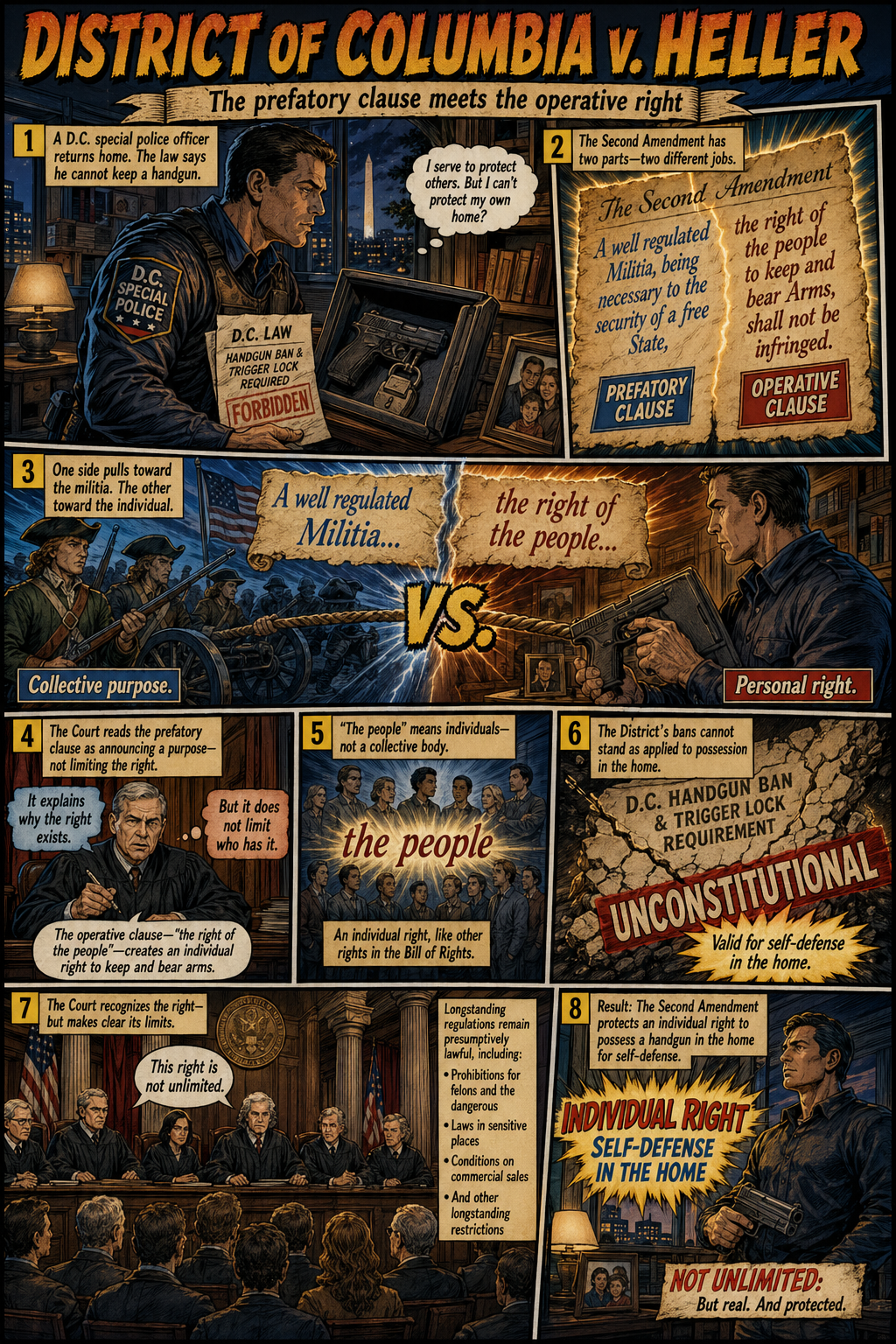
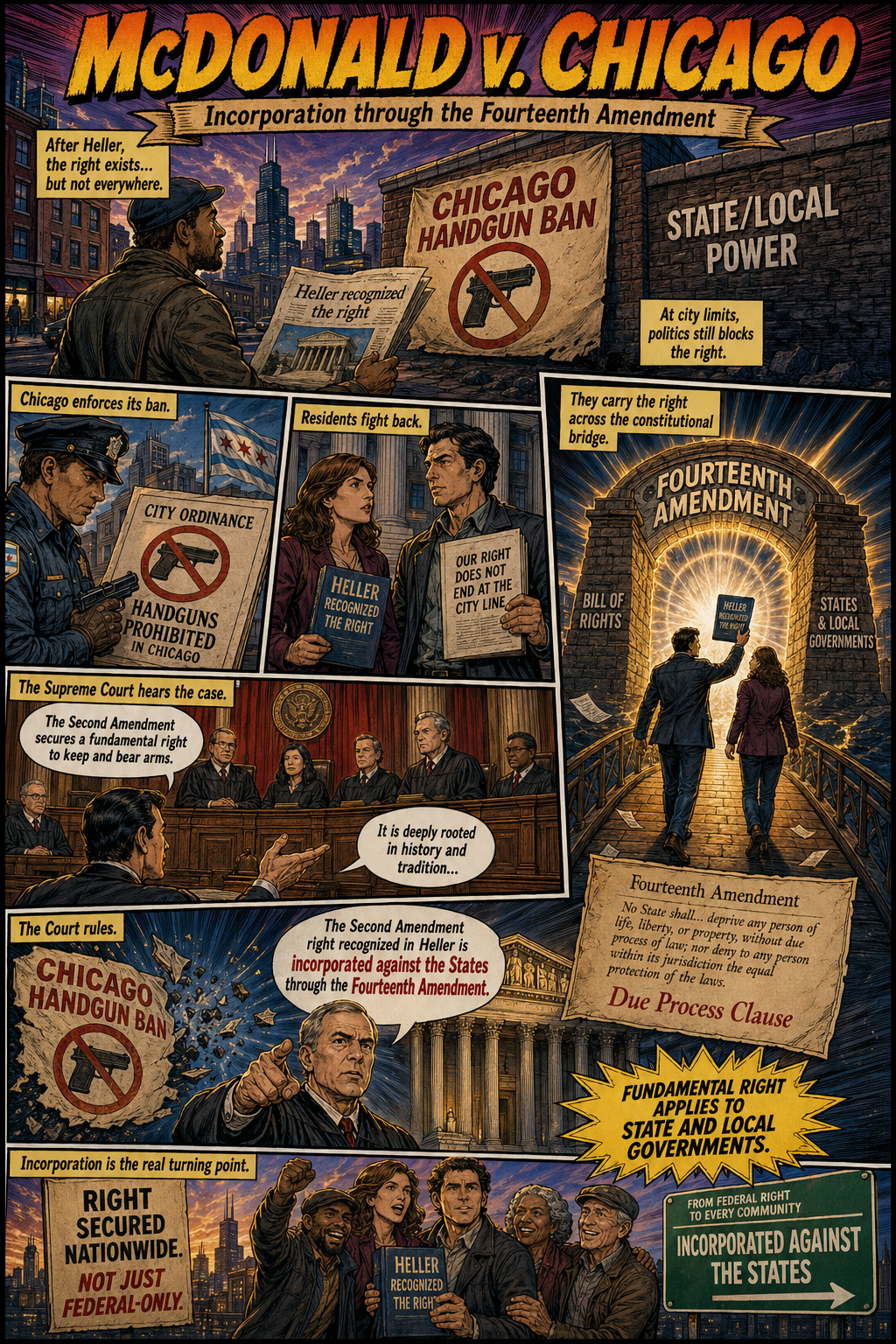
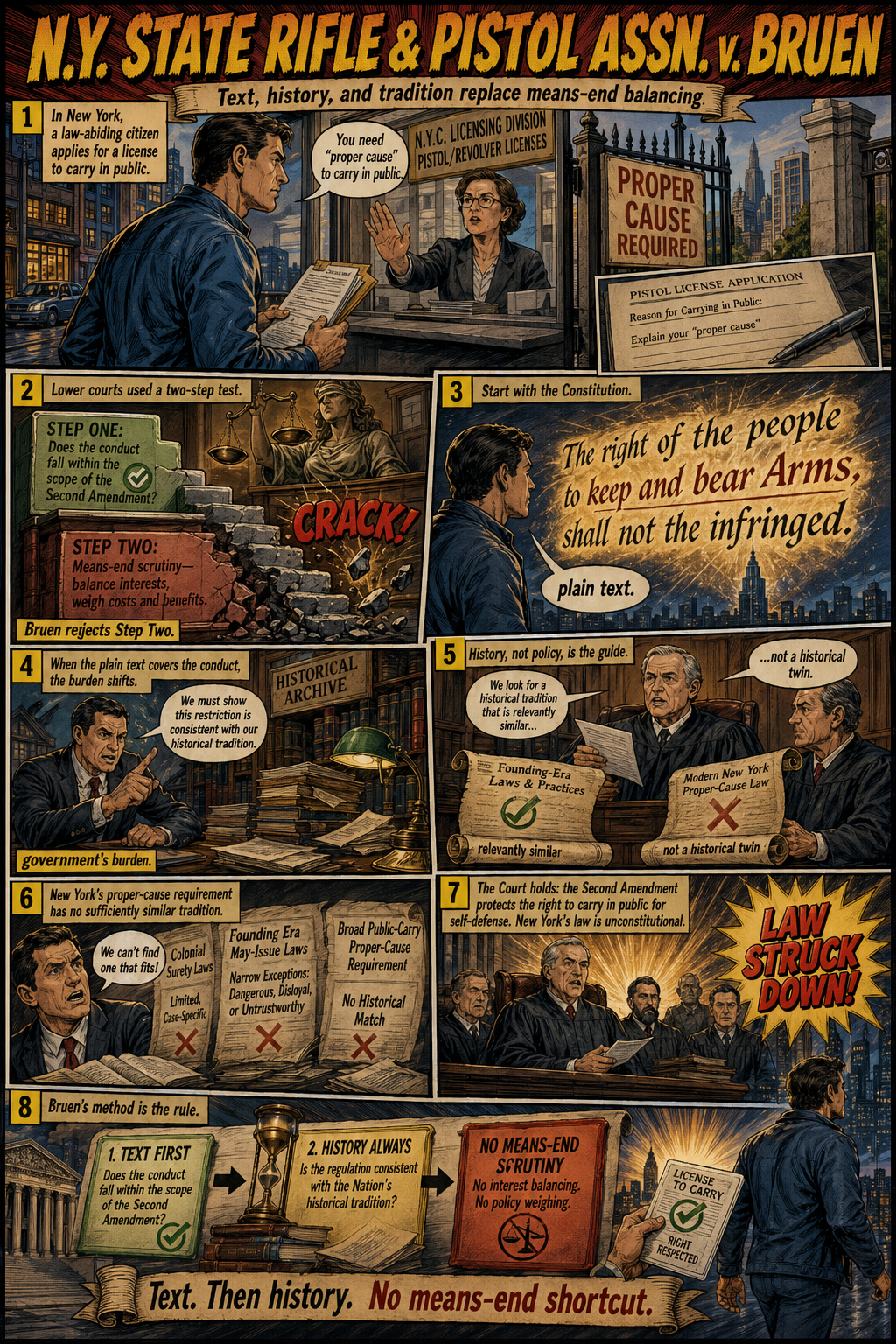
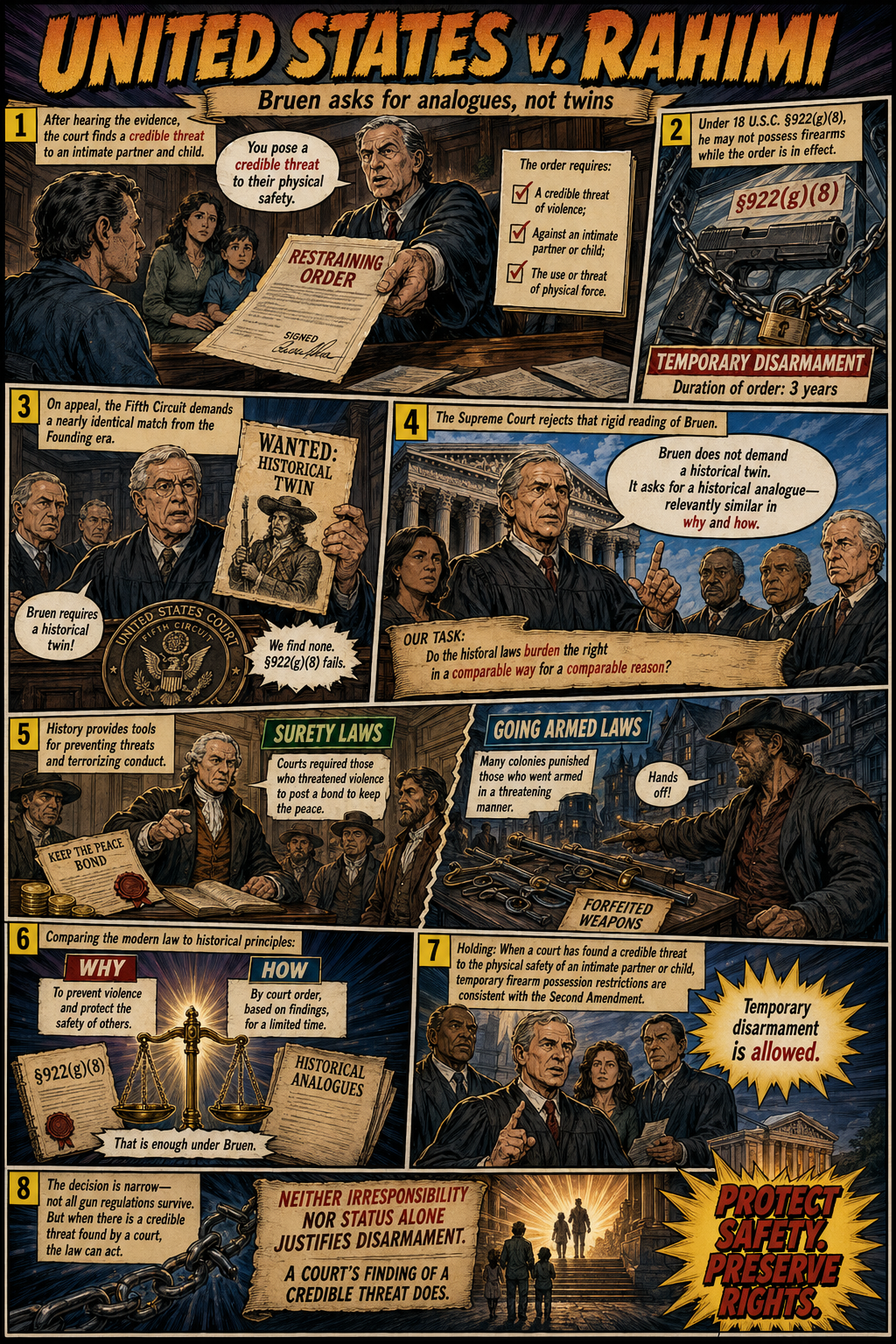
The fact that the technique works technically does not mean, of course, that it works pedagogically. I'm going to test that latter issue next week. As we have hit the end of the semester, I have to teach the Second Amendment in a single class. I'm going to try to generate the Heller, McDonald, Bruen, Rahimi sequence with comic book illustrations. I'll amend this posting after I see whether the students love it, regard it as an interesting novelty (to be repeated infrequently), or prefer my classic PowerPoints. In the meantime, however, I would urge those in legal education to take advantage of these new image generation models and think of new ways to engage with students in media at least many of them enjoy.